Hello, Architect Ngo Viet Nam Son. Looking back on the journey of Architect Ngo Viet Thu on the 100th anniversary of his birth, what do you think represents his architectural thinking, especially in a Vietnam that, at the time, did not yet truly have a modern architectural language of its own?
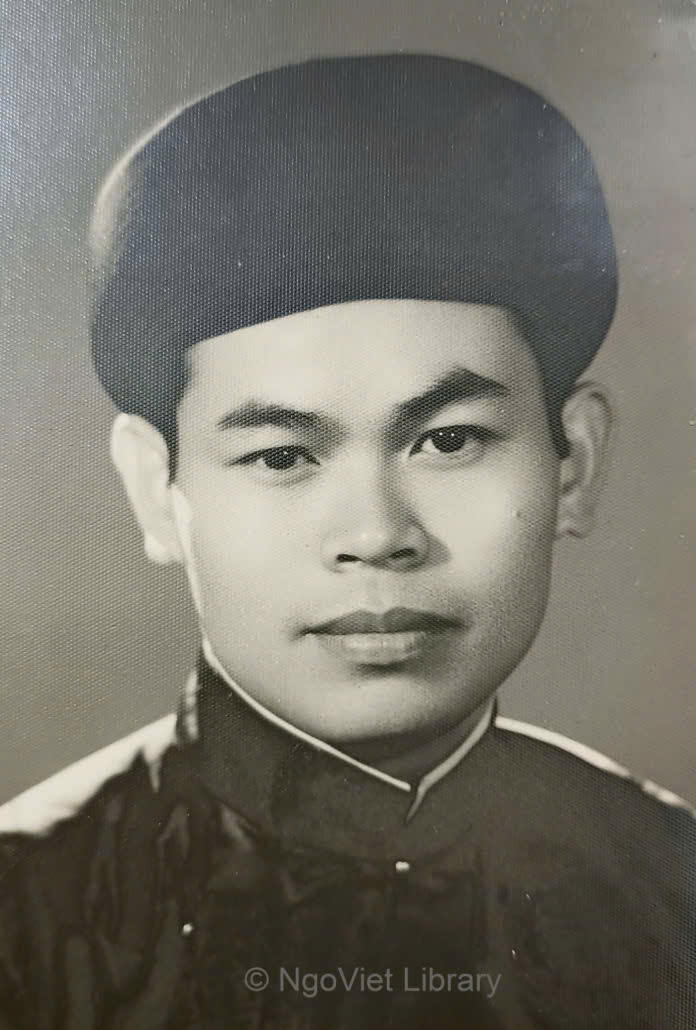
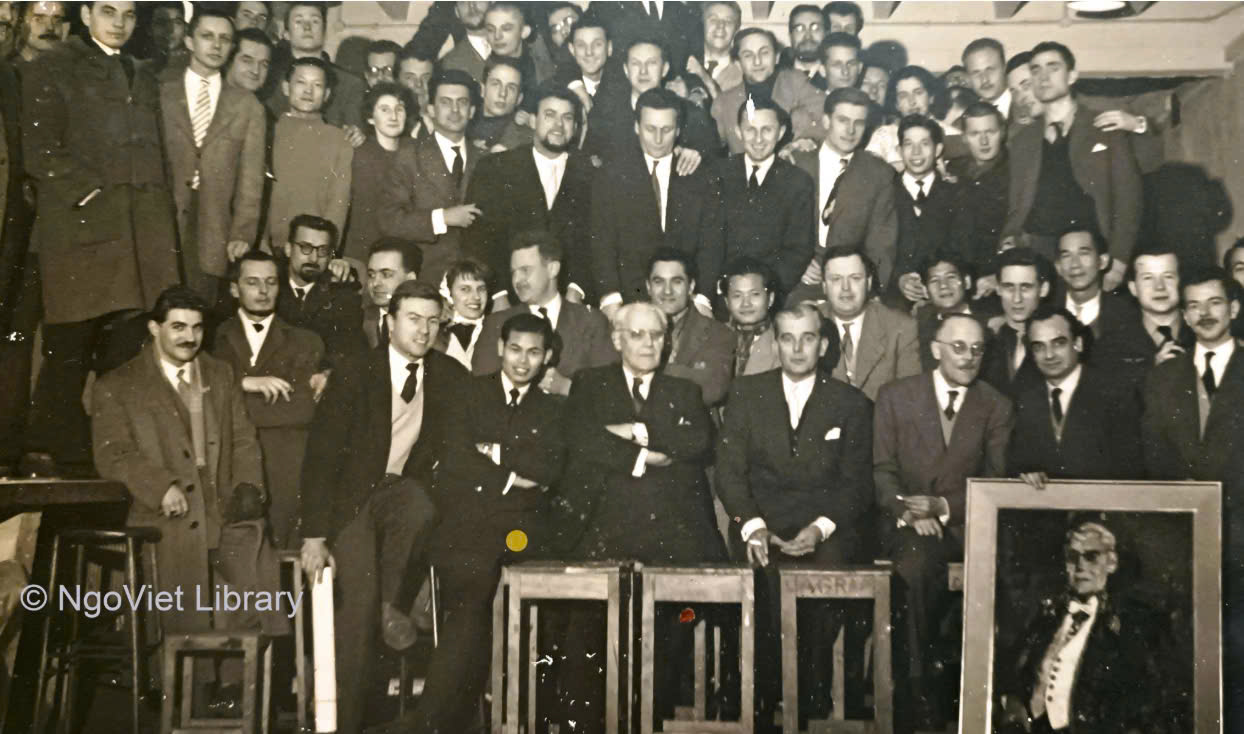
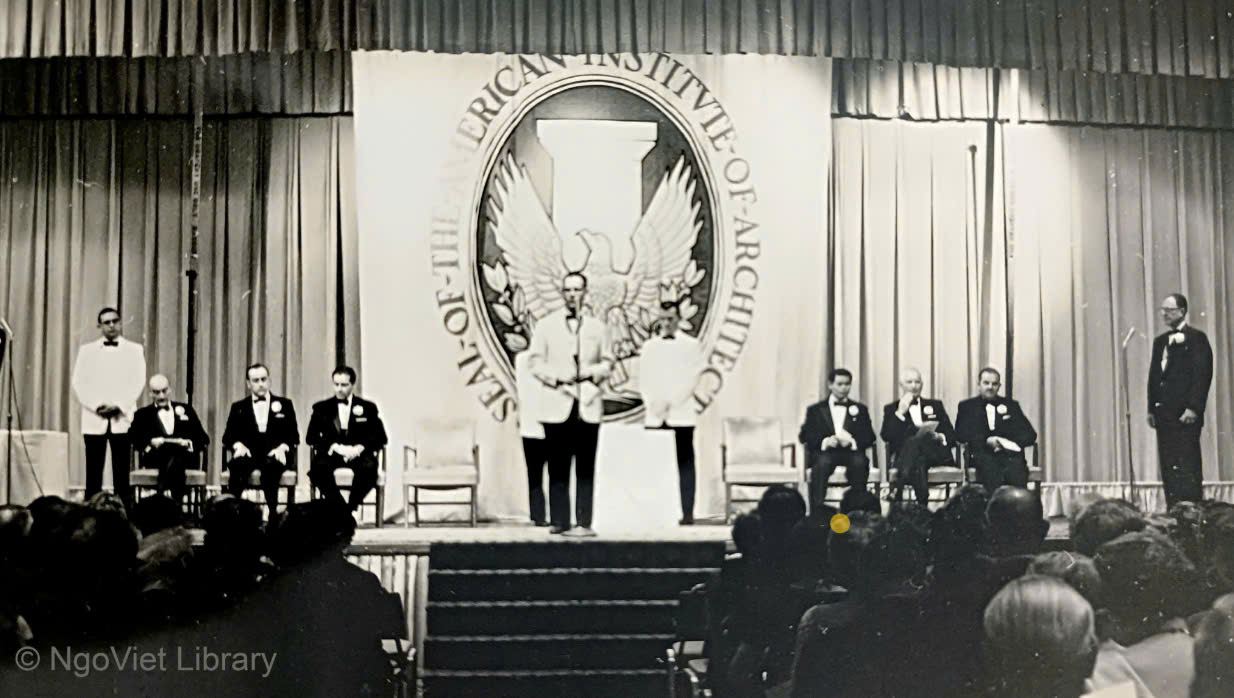
Architect Ngo Viet Thu was one of Vietnam’s leading architects and helped shape a modern architectural style with a distinctly Vietnamese identity from the second half of the 20th century. At a time when more than 90% of Vietnamese architects were trained in the Beaux-Arts school system in France and in Vietnam, he became a leading figure by winning the 1er Grand Prix de Rome in 1955. This was the most prestigious prize in all of French architecture throughout the Beaux-Arts school’s golden age of 1663–1968, with an influence that spread not only across Europe, including France, but throughout the world, including Vietnam. Yet after returning home, he chose not to build his career on Beaux-Arts design experience. Instead, he pioneered modern architecture along a path of his own for the country, with an independent, creative mindset that produced works suited to Vietnam’s climate, customs and culture.
L’Architecture d’Aujourd’hui magazine (France, 1966) wrote of him: “Ngo Viet Thu’s Independence Palace shows that a Vietnamese architect can reinterpret modernism through indigenous cultural symbols, creating a unique national style!”
His works blend the spirit of modernity with Eastern culture, but not by imposing traditional forms onto modern functions. In your view, did he approach it from the very practical problems of architecture in Vietnamese society’s development at that time, or did he build his style on a clear theoretical foundation?
I think he built his career not on any particular theory, but on love of his country and homeland, rather than on worldly goals of fame and gain. He expressed this in many of his creations, such as his paintings, poetry and professional writings. He decided to return home to serve in 1960 rather than practice in France, and later chose to stay and help rebuild the country in the post-war period after 1975. He also declined the post of Minister of Reconstruction so that he could devote his whole life to searching for and creating modern architectural solutions suited to Vietnam’s climate, way of life, culture and customs.
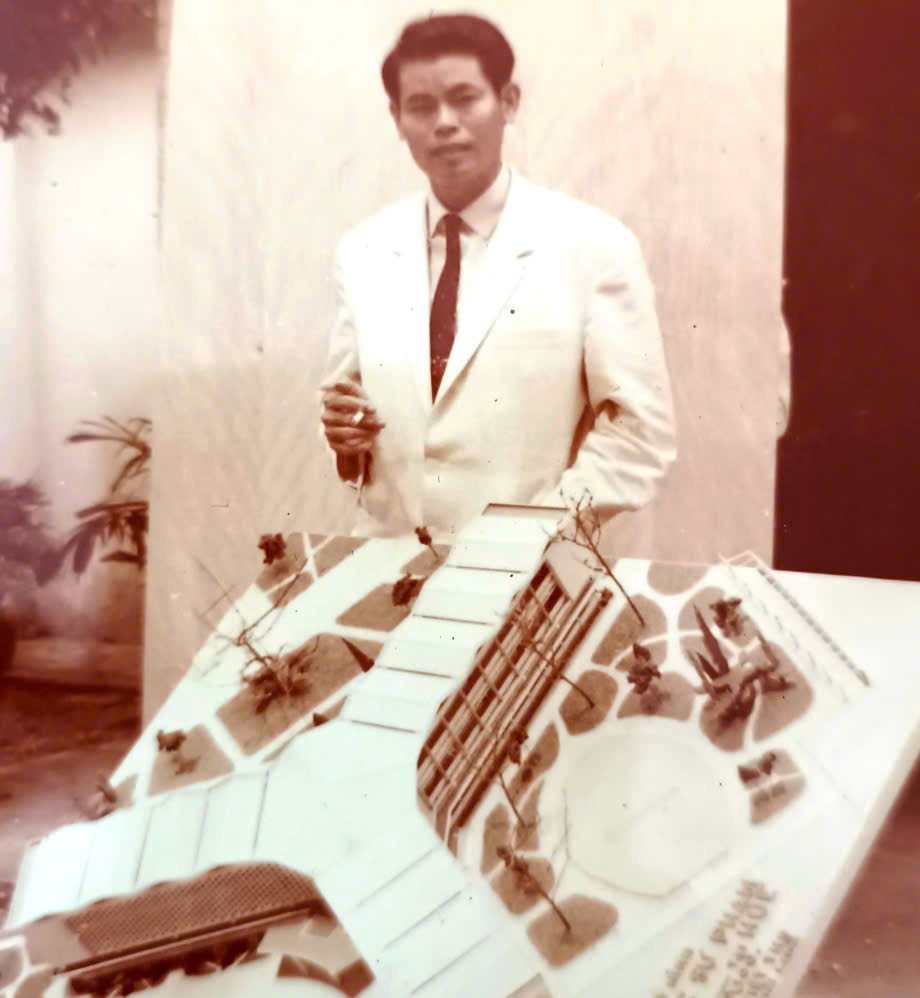
As an architect-artist skilled in music, chess, poetry, painting and sculpture, and deeply versed in Eastern culture (Confucianism, I Ching studies, Taoism, Zen, Han and Nom calligraphy, ink-wash painting, and so on), his works often bear distinctive hallmarks. First, he gave each building its own philosophical meaning (Independence Palace, whose façade recalls the principles of the “Kingly Way” (Vuong dao) for national leaders; the Da Lat Nuclear Research Institute, with its Bagua (Eight Trigrams) reactor, a reminder to use science for peaceful purposes; the Y-shaped plan of the Hue University of Education, representing “Nhan” (humaneness), placing people and humanism at the root; and so on). Second, harmony with the tropical climate: he was among the first to propose “double-skin modern architecture” in Vietnam (claustra plus an inner layer of doors at Independence Palace, Hue University of Education, the Crystal Palace shopping arcade, Song Be Hospital, and others), which shields against rain and sun while regulating the light and wind entering the interior.
It feels as though Architect Ngo Viet Thu’s generation believed that architecture could help shape a new nation. In your view, does that belief still exist today?
In the last century, Kenzo Tange, Vann Molyvann, Olivier Cacoub, Oscar Niemeyer, Alvar Aalto, Ngo Viet Thu and his fellow Vietnamese architects were all pioneers in localizing modernism. Each blended the International Style with his own nation’s culture, climate and philosophy, opening up new trends with an international outlook and contributing to the development of their national architecture! Today we have many young architects who have won international awards. However, most of their works bear only a unique personal stamp. Though novel, they are not yet convincing enough to be replicated and to form a whole new architectural movement specific to Vietnam in the new era. That is a remaining gap, and Vietnamese architects of the 21st century still have to work hard to achieve what the older generation of Vietnamese architects did in the last century.
As someone who both lives within family memory and works professionally on the international stage, what do you see as still not fully explored by today’s architectural community in his legacy?
I think the most impressive thing Architect Ngo Viet Thu did came after his first scheme to preserve and restore Norodom Palace failed, because the old and new structures could not be connected given the severe damage from the bombing. The famous architects of his time were invited by the Presidential Palace to contribute new proposals for the Palace, and all submitted proposals in a European classical style or an Indochinese architectural style. He alone had the courage to propose a modern architectural style for Independence Palace.
After many debates with his ministers, President Ngo Dinh Diem decided to choose the modern architectural scheme. Persuading leaders heavily influenced by Confucian or French culture to choose an unprecedented modern scheme for a building of national stature was clearly a major, turning-point victory. From then on, Vietnamese architecture shifted entirely into a new chapter of development in the modern style. Some people today still say that Norodom Palace was “more beautiful” than Independence Palace, and that “a new Palace should have been rebuilt entirely in the French classical style.” We should understand the matter more deeply. Although, as a Laureate of Rome, he was fully capable of doing exactly that, his success in persuading others to accept a new modern design for the Palace was certainly an important cultural achievement, just as important as the creation of the ao dai!
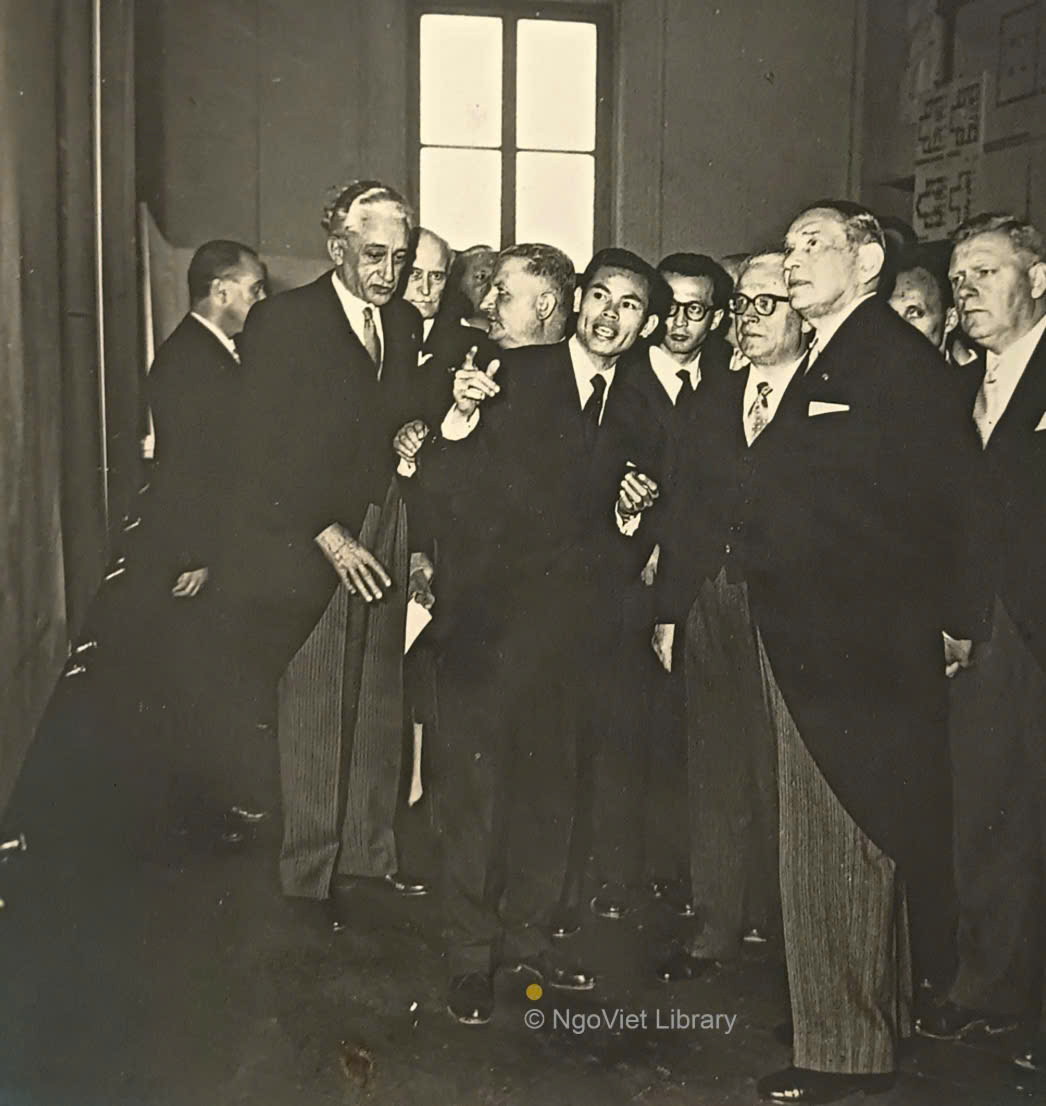
At national festivals abroad, in contrast to glamorous evening gowns, the simple yet elegant image of the Vietnamese ao dai holds its own. The modern beauty of Independence Palace, with its strongly Vietnamese identity, is likewise a fresh creation expressing national pride in a way that is far more authentic and valuable than copying a flashy, foreign-inspired version of a new “Norodom Palace”! That is also something today’s architects need to keep reflecting on whenever they have the opportunity to take on key national projects!
If today you had to introduce Architect Ngo Viet Thu to a generation of young architects who never lived in his era, would you want them to see him as a historical icon, or as someone who can still engage in dialogue with the present?
In his book on modern architecture in South Vietnam, Mel Schenck says that Architect Ngo Viet Thu is proof that modern architecture can harmonize with Vietnamese cultural symbols and the tropical climate. His works, such as Independence Palace and Phu Cam Cathedral, became reference points for later architects who continued to adapt modernism to the local context.
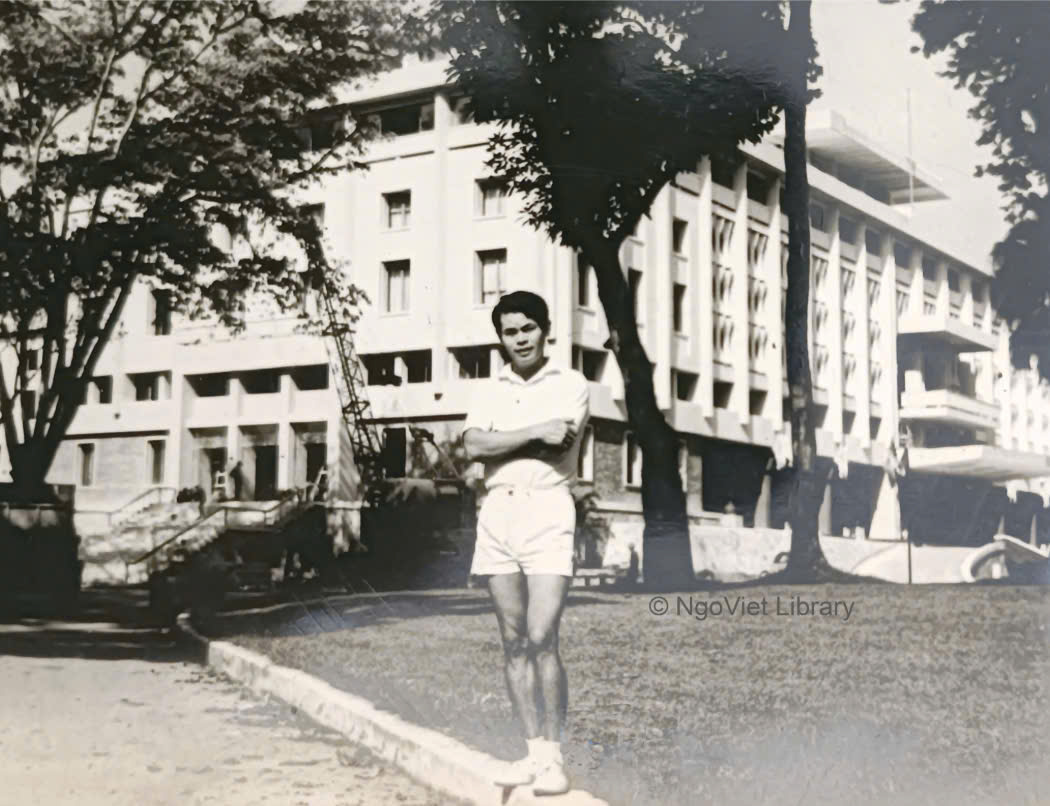
I would like to picture his career within the whole of Vietnamese culture as a great branch of a thousand-year-old ancient tree, an inspiration for the careers that follow, so that the younger generation of architects, myself included, can continue as smaller branches grafted onto it, growing ceaselessly, sprouting buds and leaves, always bearing new flowers and new fruit, helping that ancient tree, Vietnam’s thousand-year culture, rise up and stand shoulder to shoulder with the world’s great powers.
Beyond the street named after Ngo Viet Thu in Hanoi since 2019, I hope that in the future his name will also be present in the provinces and cities where he contributed greatly to local formation and development, such as Ho Chi Minh City, Hue, Da Lat, Quang Nam, Can Tho and others. This would be not only an honor, but also a way of raising the creative inspiration of the younger generation to keep contributing to their homeland.
Interview by: ChuKim